 EN
EN


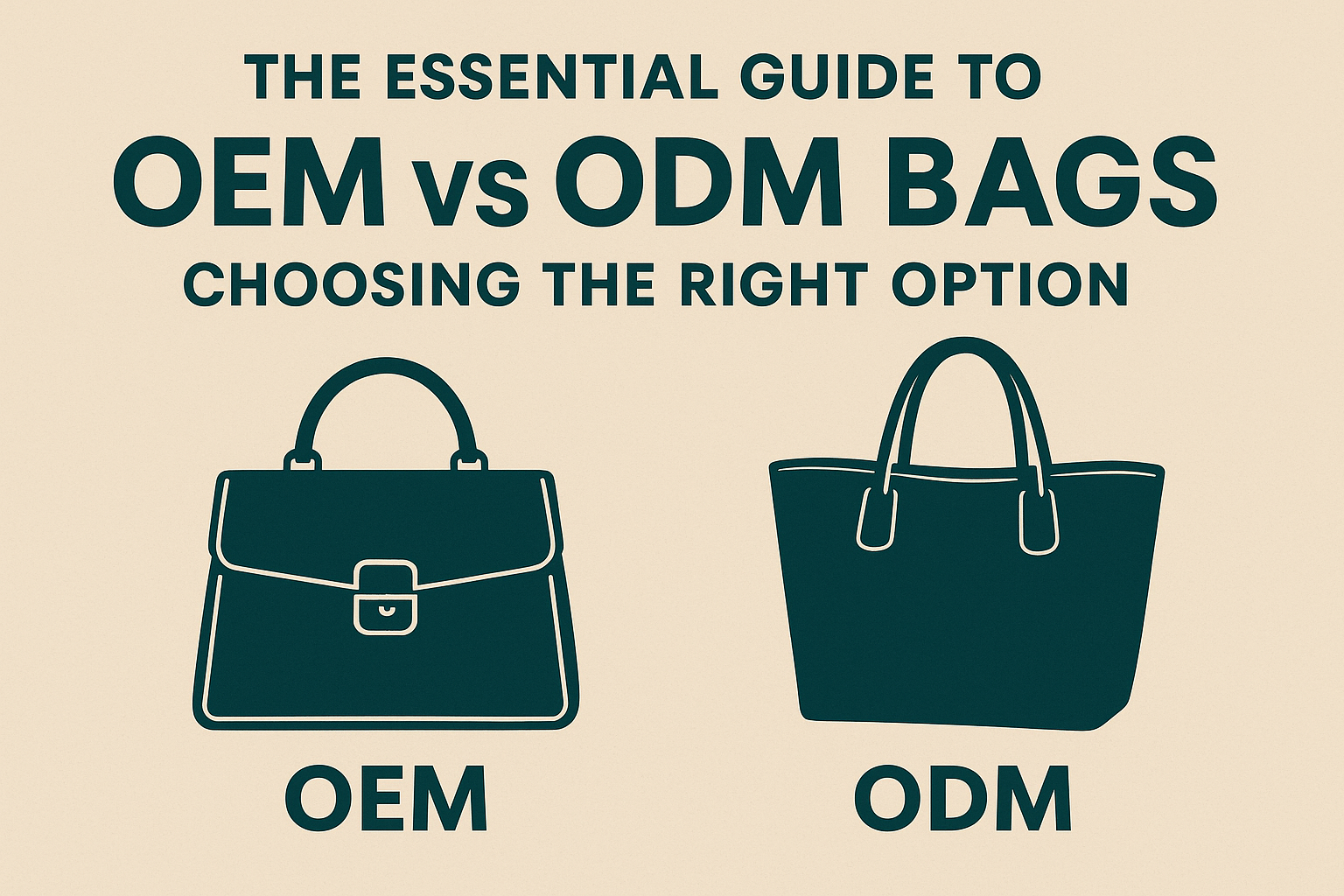
OEM and ODM are the most common cooperation models for bag procurement. For purchasers, selecting the right production model directly impacts product development efficiency, cost control, product differentiation, and intellectual property management.
In this article, we will explore the key differences between OEM and ODM, including their production processes and advantages, to help you choose the right manufacturing model for your business.
1. Definition of OEM/ODM Bags
1.1 OEM
OEM stands for Original Equipment Manufacturing; it refers to a production model in which the client provides a clear product plan—including the product design and specifications—and the manufacturer carries out the production.
Simply put, the customer decides what the product is, and the manufacturer is responsible for producing it.
For example, an outdoor bag brand has designed a travel backpack that includes:
-
- Product dimensions
- Fabric requirements
- Functional features
- Internal structure
- Logo design
Then, a professional bag manufacturer is engaged for prototyping and mass production; this is a typical OEM partnership model.
1.2 ODM
ODM stands for Original Design Manufacturing; it refers to a business model in which a manufacturer participates in product design and development and carries out production based on client requirements, market trends, and product positioning.
Simply put, the manufacturer handles not only production but also the early-stage product development process.
For example, a retailer wants to develop a business laptop backpack but lacks a professional design team, offering only the following:
-
- Targeted at business professionals
- Fits 15.6-inch laptops
- Requires a lightweight yet highly protective design
- Positioned for the mid-to-high-end market
Then, Manufacturers provide design proposals and material recommendations based on customer needs, helping clients bring their products to fruition.
2. Differences Between OEM and ODM Bag Production Processes
The differences between OEM and ODM production processes primarily occur during the product development stage. Once the product design is finalized and the process moves to prototyping and mass production, the workflows for both are essentially the same.
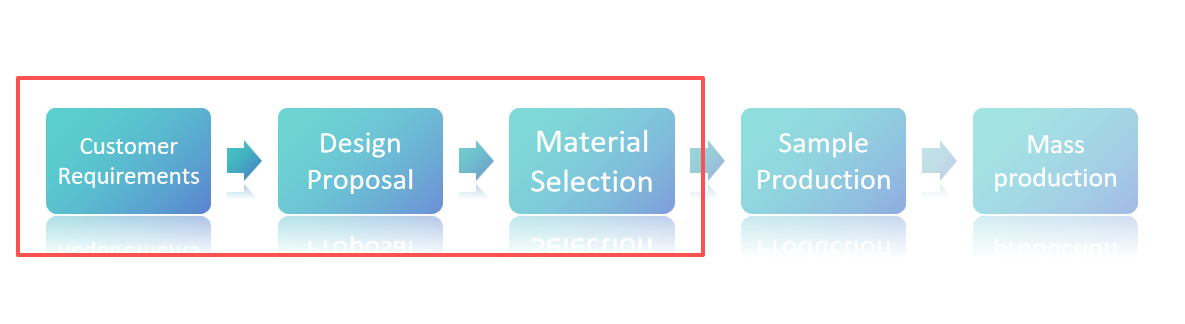
During the product development stage:
-
- OEM clients typically provide detailed product design specifications, including technical drawings, product specifications, and requirements regarding materials and manufacturing processes. The manufacturer is responsible for assessing production feasibility and confirming costs and lead times. Once an agreement was reached, the production of samples began in accordance with the requirements.
- ODM clients typically provide only product positioning, target market, and functional requirements. Based on requirements, the manufacturer finalizes the product design and submits it to the client for approval; once costs and delivery schedules are confirmed, the prototyping phase begins.
For a detailed production process, please view our other article: "How Are Bags Manufactured: An Overview of the Bag Manufacturing Process."
3. Advantages of OEM and ODM Bags
|
OEM |
ODM |
|
|
There is no absolute distinction of superiority or inferiority between OEM and ODM; the descriptions above highlight the relative advantages of each model in actual partnerships, but this does not imply that the other model completely lacks those attributes.
For example, an ODM arrangement can also enable exclusive product development, while an OEM arrangement can provide access to the manufacturer's design optimization support; the specifics depend on the nature of the collaboration and the terms of the contract.
4. How to choose between OEM and ODM Bags?
The choice between OEM and ODM primarily depends on the company's own product development capabilities and the desired level of manufacturer involvement.
Key difference:
-
- OEM is suitable for clients who already possess product designs and clear specifications and are looking for a reliable factory for production;
- ODM is suitable for clients who need to leverage a manufacturer's design and development capabilities to launch products.
However, when actually sourcing bags, companies also need to comprehensively consider the following factors:
4.1 Development investment and costs
Different models entail different resource investments.
OEM clients need to invest more upfront resources—such as in product design, development personnel, and product testing—but the advantages are also significant: greater product autonomy and higher brand value.
ODMs can leverage a manufacturer's existing experience to reduce design investment and avoid the costs associated with trial and error during product development; the advantages include lower costs and faster time-to-market.
4.2 Product Uniqueness
Enterprises also need to consider whether their products require a high degree of differentiation.
If a product requires a high degree of customization—such as a bespoke appearance and a unique structural design—OEM is usually the more suitable option.
Although ODM can also achieve product differentiation, the results may not be as ideal as those of OEM, since such differentiation is typically based on the manufacturer's existing experience.
4.3 intellectual property
Product design rights are also an important consideration.
Since product designs are typically provided by OEM customers, the origin of the product's intellectual property rights is usually more clearly defined.
In the ODM model, since the manufacturer participates in—or even leads—product design and development, both parties need to clarify the following points in advance:
-
- Ownership of design deliverables
- Whether the client holds exclusive usage rights
- Duration and scope of the exclusive partnership
4.4 Order size
Enterprises also need to consider the scale of their orders and the stage of procurement.
OEM clients typically have clearly defined product requirements and stable order schedules; furthermore, since OEM projects often entail a higher degree of product customization—requiring manufacturers to invest more in upfront development resources—Minimum Order Quantities (MOQs) are generally set at a relatively high level.
In contrast, ODM projects can take advantage of the manufacturer’s existing development capabilities, including design expertise, product solutions, and supply chain resources. By reducing upfront development costs, ODM is often more suitable for supporting small-batch orders.
Conclusion
There is no absolute superiority or inferiority between OEM and ODM; the key to the choice lies in how a company assesses its own product development capabilities, brand strategy, and procurement scale.
For buyers, selecting a bag manufacturer that possesses product development capabilities, large-scale production capacity, and a quality management system is more important than simply choosing an OEM or ODM model. A reliable manufacturing partner can not only help a company navigate the entire process from product concept to mass production but also create additional value through design optimization, cost control, and production management.
FAQ
Q1: What is the biggest difference between OEM and ODM bags?
A: The level of involvement varies across product development stages.
-
- OEM: The customer defines the product, and the manufacturer is responsible for production;
- ODM: The client specifies requirements, and the manufacturer participates in product development.
Q2: For ODM bags, are you limited to choosing from the factory's existing products?
A: No, the ODM model encompasses the process of developing new products. The practice of selecting a factory's existing products is known as private labeling.
Q3: Who owns the intellectual property rights for ODM bags?
A: The ownership of intellectual property rights for ODM products is determined by the agreement between the two parties.
Q4: Is the MOQ for OEM bags typically higher than for ODM bags?
Generally speaking, the MOQ for OEM projects may be relatively high.
Related Reading
1. Differences Between Importing Bags from China and Vietnam