 EN
EN


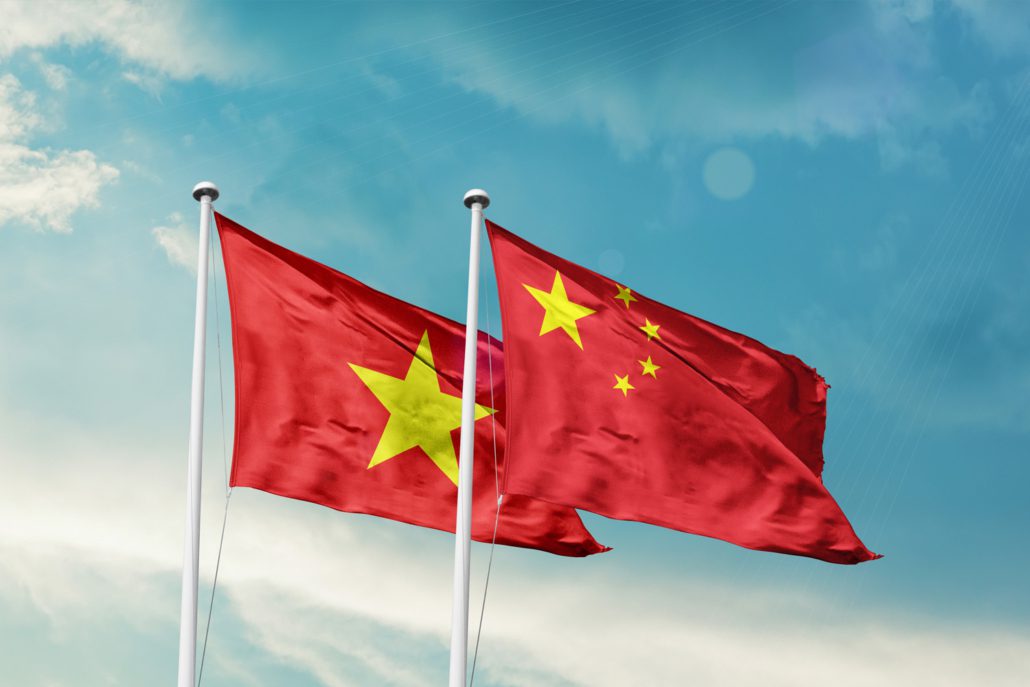
Within the global supply chain for bag procurement, China and Vietnam stand as two major manufacturing hubs, each suited to handling B2B orders that vary in volume, target market, and craftsmanship requirements. Based on five core dimensions—including landed cost, manufacturing processes, and delivery capabilities—this article provides an in-depth breakdown of the key differences in importing bags from the two countries.
1. Total Landed Cost
The total landed cost typically encompasses actual delivery costs, such as the ex-factory purchase price, international logistics expenses, and customs duties.
Leveraging a mature, localized industrial chain, China's bag industry benefits from the ability to source key components—such as leather, hardware, zippers, and fabrics—locally through one-stop procurement, supported by a comprehensive supply chain and high logistics efficiency. Under identical process and specification conditions, China typically enjoys a certain cost advantage. In the U.S. market, Chinese bags (HS 4202) are typically subject to Section 301 tariffs, with a combined tax burden reaching 30%–45%. In markets free from tariff barriers—such as the European Union, South America, the Middle East, and Africa—China retains strong cost competitiveness, underpinned by its mature supply chain system.
One of the key advantages of Vietnam's bag industry lies in its well-developed network of free trade agreements. Leveraging multilateral trade agreements such as the EVFTA and CPTPP, Vietnam's exports of bags to member markets—including the EU, Canada, and Japan—can qualify for tariff reductions or exemptions under certain conditions. However, as the domestic bag supply chain is still maturing, there is a degree of reliance on external suppliers for key components—such as high-end leather, precision hardware, branded zippers, and functional fabrics—resulting in generally high ex-factory base prices. Overall, Vietnam’s landed-cost advantage is mainly seen in markets where preferential tariff policies apply, while its competitiveness is more limited in markets without such tariff benefits.
In short: China gains cost competitiveness from its mature and integrated supply chain, while Vietnam benefits from tariff policy advantages in specific markets.
2. Production Capability & Product Complexity
Manufacturing process complexity and custom development capabilities are the key factors differentiating the manufacturing capabilities of China and Vietnam.
China possesses world-class manufacturing capabilities that cover the full spectrum of product categories and production processes. After years of industrial cluster development, China's bag industry has reached a high level of maturity in mold-making technology, manufacturing standards, supply chain coordination, and quality control systems. Stable, large-scale production can be achieved for everything from basic canvas bags to high-end genuine leather bags with complex structures. At the same time, Chinese factories possess mature ODM capabilities, supporting complex structural design and the development of multi-material composite processes, while maintaining high consistency and stable quality even during mass production.
Vietnam's manufacturing capabilities are primarily concentrated in the sector of basic and low-to-medium complexity bags and luggage, with a focus on standardized OEM production. It offers consistent production stability for basic sewing and standard-construction products, capable of meeting the mass market's fundamental procurement needs. However, regarding complex structural design, the integration of multiple manufacturing processes, and the development of high-end functional features, the overall technical foundation is still evolving; original design capabilities as an ODM remain relatively limited, with production relying primarily on complete design specifications provided by clients.
In short: China excels at high-end, complex, and customized R&D, offering superior manufacturing capabilities; Vietnam focuses on basic, standardized mass production, with limited capacity for customized R&D.
3. Minimum Order Quantity (MOQ) and Lead Time
China’s manufacturing system offers a well-structured production capacity hierarchy, enabling it to support a wide range of order volumes, from small trial orders to large-scale production runs. Leveraging a mature supply chain and production management system, the prototyping lead time is typically 7–10 days, while the lead time for mass production is approximately 30–60 days. For ultra-large orders, delivery capabilities can be enhanced through multi-factory collaboration, ensuring a high degree of predictability in the overall delivery schedule.
Vietnam's manufacturing system offers a degree of flexibility regarding small- to medium-batch orders and is generally well-suited to low-MOQ requirements. For some products, the MOQ can be as low as 50–200 units; the prototyping lead time for standard, simple designs is approximately 5–7 days, while small-batch production takes about 15–30 days, ensuring rapid response times for standardized orders. However, delivery schedule stability is relatively lower for large-scale orders or those involving complex materials or custom development.
In short: China delivers orders across the entire volume spectrum with high stability, while Vietnam holds a rapid-response advantage for small-to-medium batches and basic styles.
4. Compliance, Certifications & Origin Traceability
Chinese factories producing bags for export possess a mature foundation for compliance; most large-scale facilities hold standard certifications for quality management and social responsibility—such as ISO, BSCI, and Sedex—and can provide mandatory environmental and safety test reports for Western markets (including REACH, California Proposition 65, and CPSIA) upon request. China possesses a comprehensive third-party testing system; thanks to short testing turnaround times and controllable costs, it can rapidly meet the requirements of European and American brands regarding supplier audits and product compliance. Overall, China possesses a mature system regarding customs clearance documentation, certificates of origin, and commercial inspection procedures, providing a relatively stable compliance pathway for products entering the global market.
Vietnam lacks domestic testing resources; high-end environmental and safety testing relies on overseas institutions, resulting in long turnaround times and high costs. Moreover, environmental and labor compliance levels among small and medium-sized factories vary significantly, resulting in low pass rates for major clients' factory audits. The primary risk lies in stricter origin traceability requirements; customs authorities in Europe and the US trace raw material import documentation throughout the entire supply chain. If products incorporate semi-finished goods or undergo only minimal processing in Vietnam—and complete traceability data cannot be provided—they will be deemed to be circumventing tariffs. This entails risks such as cargo seizure, fines, and the loss of preferential tariff treatment, representing the single greatest hazard for imports from Vietnam.
In short: China boasts a robust compliance system and stable market access, whereas Vietnam’s testing and compliance frameworks are relatively weak, entailing higher compliance risks regarding traceability.
5. Summary of Supply Risks
China's bag supply chain is mature and stable overall, possessing strong resilience against risks. Key risks center on fluctuations in production scheduling during peak seasons, while small-scale factories need to focus on compliance and environmental protection issues. Overall, China possesses a relatively well-developed system for raw material supply, production coordination, and logistics, keeping overall risks at a controllable level.
Vietnam’s bag supply chain is still in the development stage, with a relatively high reliance on external suppliers for key components and core materials. Cross-border logistics and customs clearance processes add uncertainty to overall supply chain stability. At the same time, the production side is more significantly affected by factors such as labor strikes and power rationing during the dry season. Finally, there are customs risk management concerns; if supply chain traceability documentation is incomplete, there is a risk of losing tariff preferences and facing compliance audits. Overall, supply chain stability is far lower than that of China.
In short: China's supply chain carries low risk and is controllable overall, whereas Vietnam's supply chain involves numerous uncertainties and greater risks regarding risk management.
Conclusion
|
|
China |
Vietnam |
|
Total Landed Cost |
Ex-factory cost advantages driven by a mature supply chain |
Tariff advantages in specific markets |
|
Production Capability & Product Complexity |
Strong in high-end complex customization and product development, with advanced manufacturing capabilities |
Focused on basic standardized mass production, with more limited customization and development capabilities |
|
MOQ and Lead Time |
Suitable for orders of all sizes with strong production stability |
Offers fast-response advantages for small-to-medium orders and basic products |
|
Compliance, Certifications & Origin Traceability |
Well-established compliance systems with stable market access capabilities |
Relatively less developed testing and compliance systems, with higher traceability compliance risks |
|
Supply Risks |
Low supply chain risk with strong overall stability and control |
More supply chain uncertainties with greater risk management challenges |
In summary, the bag manufacturing systems of China and Vietnam each have their own strengths and weaknesses, with complementary shortcomings: China’s supply chain is mature, offers comprehensive manufacturing capabilities, and ensures stable regulatory compliance; it excels in high-end customization and large-scale, steady orders, though it faces challenges regarding high tariff costs in certain overseas markets. While Vietnam offers advantages such as tariff benefits and the flexibility to handle small-batch orders, the industry is plagued by common issues: an inability to manage complex manufacturing processes, supply chain instability, and significant risks regarding traceability and compliance.
Unlike ordinary bag manufacturers that rely on a single production location, HPhope operates production bases in both China and Vietnam. This strategy effectively mitigates the inherent limitations associated with relying on a single facility, enabling a deep integration of strengths and mutually reinforcing capabilities across both locations. Leveraging China’s mature manufacturing foundation, we standardize core material specifications, quality control systems, and product development processes across our supply chain. This helps address common challenges in Vietnam production, including fragmented material sourcing, limited manufacturing capabilities, and traceability gaps, providing global B2B buyers with customized bag solutions that balance quality, cost efficiency, delivery reliability, and compliance.
FAQ
Q1: When sourcing bags, which offers a lower total landed cost: China or Vietnam?
A: When differentiated by export market, the key takeaway is that China wins on supply chain cost advantages, while Vietnam wins on tariff advantages. The cost advantage of Chinese bags is concentrated in markets such as South America, the Middle East, and Africa, where there are no special tariff preferences. Leveraging the EVFTA and CPTPP agreements, Vietnam benefits from tariff reductions on exports to the EU, Canada, and Japan, resulting in lower landed costs. Regarding exports to the U.S. market, China is affected by high Section 301 tariffs, whereas Vietnam holds a clear cost advantage.
Q2: When sourcing bags for the EU market, which holds the greater advantage: China's supply chain strengths or the tariff benefits offered by Vietnam?
A: It depends on the product and use case: Vietnam holds the advantage for standard models, while China excels in high-end, complex models.
Q3: What are the key differences in production processes and customization capabilities between China and Vietnam for bags, and how should one choose?
A: The core gap lies in the upper limits of manufacturing processes and custom R&D capabilities. China offers comprehensive manufacturing capabilities, mature ODM development expertise, and stable quality in large-scale production, making it suitable for high-end innovative and complex customized orders. Vietnam mainly focuses on OEM-based manufacturing, with strengths in standardized production of basic products, making it suitable for mainstream market orders.
Q4: Are there significant risks associated with tariff preferences when sourcing bags from Vietnam, and what are the main potential pitfalls?
A: One of the key risks is origin traceability compliance, as stricter verification of supply chains may affect eligibility for tariff preferences.
Q5: Regarding long-term, stable procurement, what are the key differences in supply risks between China and Vietnam for bags?
A: China’s risks are controllable and its stability is strong, whereas Vietnam faces numerous underlying uncertainties.
Related Reading