 EN
EN


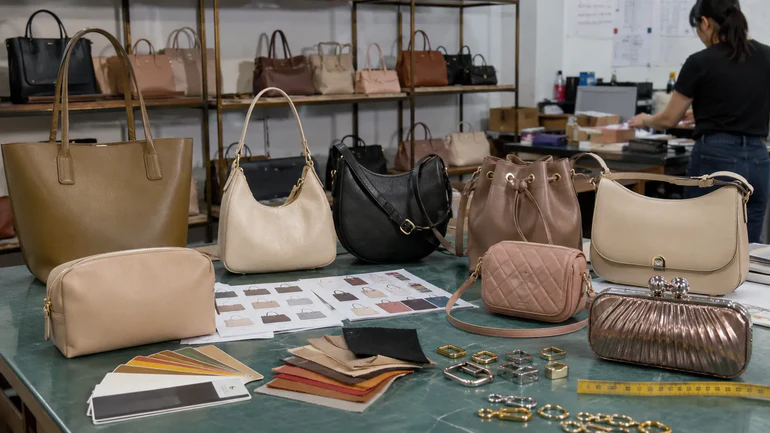
In the global bag sourcing market, product quality remains a key concern for buyers. A high-quality bag requires not only an appealing design but also compliance with strict standards for materials, workmanship, and functionality.
So, what are the standards for high-quality bags? What key factors should be considered when selecting a bag manufacturer?
What is a high-quality bag?
Using expensive materials does not equate to high quality; true quality is the result of the combined effect of product design, material selection, manufacturing processes, and quality control. Typically, high-quality bags possess the following characteristics:
-
- A combination of high-quality materials and robust craftsmanship ensures product durability;
- Optimized structural design to enhance user experience and functional performance;
- Meticulous workmanship control ensures that details meet quality standards;
- Functional specifications align with the target market positioning and consumer needs;
- Maintain consistent quality in mass production.
For purchasers, high quality translates to lower after-sales risk, a better user experience, and stronger market competitiveness. Next, we will explore how high-quality bags are produced in mass production across several key areas.
1. Fabric: Determines the Product's Fundamental Performance.
The fabric is a fundamental factor influencing the quality and user experience of bags. To determine whether a manufacturer is professional, the key is to assess whether they can select suitable fabrics based on product positioning and control fabric quality.
We generally classify fabrics into three specifications:
1.1 High-strength Fabric
-
- Key Features: Possesses higher structural strength and durability.
- Common Specifications: 840D/1000D/1680D Nylon, 1200D Polyester
- Common Applications: Outdoor bags, tactical backpacks, high-capacity travel bags, products requiring long-term load-bearing capability.
- Common Coatings: PU, TPU
1.2 Medium-weight Fabric
-
- Key Features: Able to strike a good balance between strength, weight, and cost.
- Common Specifications: 420D/600D Nylon, 600D/900D Polyester
- Common Applications: Business backpacks, laptop backpacks, commuter bags, everyday travel bags
- Common Coatings: PU, DWR finish
1.3 Light-weight Fabric
-
- Key Features: Lightweight
- Common Specifications: 210D Nylon, 210D/300D Polyester
- Common Applications: Foldable bags, lightweight backpacks, casual bags, products emphasizing portability
- Common Coatings: DWR finish, lightweight PU
Therefore, a high-quality bag does not necessarily require the highest-specification fabric; rather, the most suitable material is selected based on the product's intended use, target market, and cost requirements.
2. Manufacturing Process: Determines Product Structure and the Ability to Realize the Design
Even with identical materials and design specifications, products manufactured by different makers may exhibit significant differences in structural stability, aesthetic appearance, and service life. A reliable bag manufacturer requires not only mature production processes but also the ability to translate design requirements into stable, reliable products for mass production, aligned with the product's market positioning.
2.1 Precision Cutting and Structural Shaping
Bags are typically composed of a combination of fabrics, accessories, and structural components; precise cutting and shaping processes are fundamental to ensuring the product's appearance and structural stability. Reliable suppliers need to possess the following key capabilities:
-
- Precise cut-piece dimensions;
- Structural stability of the combined multi-layer material;
- Offers structural support suitable for different bag designs, helping maintain the bag’s shape and structure.
2.2 Reinforcement Process for Critical Areas
During prolonged use, areas such as the shoulder straps, handles, and bottom of the bag are subjected to significant tension and pressure. Therefore, the reinforcement of critical load-bearing areas is a key criterion for evaluating manufacturing processes. Professional manufacturers typically:
-
- Reinforced stitching is used in high-stress areas;
- Design different load-bearing solutions based on the product's intended use;
- Enhance product durability and operational stability through structural optimization.
2.3 Complex Manufacturing Capabilities
As market demands for functionality and design aesthetics continue to rise, modern bags often exhibit a high degree of complexity. For example:
-
- Combined application of various fabrics, linings, foams, and support materials;
- Integration of processes such as printing, embroidery, heat pressing, edge binding, and hardware installation;
- Realization of complex structures and special design requirements.
A manufacturer's comprehensive command of materials and craftsmanship determines whether the product can accurately realize the design concept.
3. Quality Control System: Ensures Consistent Quality in Mass Production
It is far from sufficient for a manufacturer to guarantee the quality of samples; ensuring consistent quality in mass production is even more important. Professional bag manufacturers typically establish comprehensive quality management systems, implementing multi-stage controls—from raw materials and the production process to final shipment—to ensure products meet customer requirements.
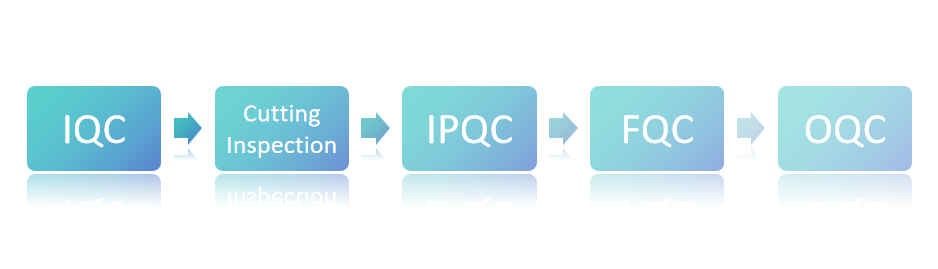
The typical contents of each inspection stage include:
3.1 Incoming Quality Control (IQC)
-
- Fabric color, specifications, and quality;
- Properties of lining and auxiliary materials;
- Quality of accessories such as zippers and hardware.
3.2 Cutting and Semi-finished Product Inspection
-
- Dimensional accuracy of cut parts;
- Consistency of materials across different batches;
- Conformance of semi-finished product structure and workmanship.
3.3 In-Process Quality Control (IPQC)
-
- Stitching quality;
- Structural assembly quality;
- Processing quality of critical areas.
3.4 Final Quality Control (FQC)
-
- Appearance quality;
- Dimensional specifications;
- Functional testing;
- Cleanliness and packaging requirements.
3.5 Outgoing Quality Control (OQC)
-
- Product quantity;
- Packaging information;
- Outer carton markings;
4. Production Capacity: Ensuring the Ability to Deliver Volume Orders
A reliable bag manufacturer must also possess stable production and delivery capabilities to ensure that orders are completed according to schedule. When evaluating production capacity, the focus can be placed on the following aspects:
4.1 Supply Chain Integration Capability
-
- Whether the supply of core fabrics, linings, accessories, etc., is stable;
- Whether it has the flexibility to respond to material fluctuations, order changes, and other unexpected situations.
A robust supply chain system can reduce uncertainties in the production process and provide more reliable delivery guarantees for bulk orders.
4.2 Factory Scale and Production Configuration
-
- Factory area and number of employees;
- Production line configuration;
- Production equipment and supporting facilities.
Factory scale and production resources directly determine a manufacturer's capacity to handle orders.
4.3 Production and Delivery Capabilities
-
- Whether the monthly output matches order demand;
- Whether there is the capability to allocate production capacity and ensure on-time delivery during peak seasons;
- Whether it has a comprehensive order management system and effective exception handling mechanisms.
Stable production capacity and the flexibility to adapt to changing circumstances are essential foundations for ensuring the on-time delivery of large-volume orders.
5. OEM/ODM Capabilities: Turning Product Concepts into Mass Production
A reliable bag manufacturer needs not only production capabilities but also involvement in the product development process, effectively integrating design concepts, market demands, and manufacturing techniques to ultimately achieve stable mass production. They typically possess the following capabilities:
-
- Ability to Understand Requirements and Translate Them into Solutions: Propose suitable materials, structural designs, and manufacturing processes based on design drawings, product concepts, or market requirements provided by the client.
- Product Development and Sampling Capabilities: Through sampling, we ensure that the design concept matches the actual product performance while achieving a balance between quality, cost, and production feasibility.
- Mass production implementation capability: Transition from samples to stable mass production, ensuring that product quality, manufacturing standards, and delivery requirements are met.
A reliable bag manufacturer is not merely an executor of production; it acts as a partner to brand clients throughout the product development process, helping to mitigate development risks and accelerate the successful launch of new products.
6. Certification and Compliance Capabilities: Ensuring a Foundation for Long-Term Cooperation
As global demands for supply chain transparency, social responsibility, and quality management continue to rise, buyers are placing increasing importance on suppliers' compliance management capabilities. A qualified manufacturer typically needs to possess:
-
- Social Responsibility and Supply Chain Audit Capabilities: Audit systems such as BSCI and Sedex help ensure that factories meet international sourcing requirements regarding employee rights, the production environment, and corporate management.
- Quality Management System: Such as the ISO quality management system, used to standardize production processes and enhance the level of quality management.
- Client Audit and Compliance Cooperation Capabilities: Able to coordinate factory audits, document management, and the implementation of relevant standards in accordance with the requirements of different brands and markets.
Conclusion
Selecting a reliable bag manufacturer requires more than just focusing on product price or a single aspect of production capacity; it entails a comprehensive evaluation of their material usage, manufacturing processes, quality management, production and delivery capabilities, product development expertise, and regulatory compliance.
An excellent bag supplier not only fulfills production requirements but also provides professional support across product development, quality control, and supply chain management, helping buyers mitigate partnership risks and secure a stable, long-term supply.
FAQ
Q1: Why is a quality control system important for bag procurement?
A: A comprehensive quality control process enables the inspection and management of materials, production processes, finished products, and shipments, thereby reducing quality risks in mass production.
Q2: Why are the certification and compliance capabilities of bag manufacturers important?
A: Standards such as BSCI, Sedex, and ISO demonstrate a manufacturer's level of compliance regarding social responsibility, corporate management, and quality control, serving as a crucial foundation for establishing long-term partnerships.
Q3: What factors should be considered when evaluating the production capacity of a bag manufacturer?
A: You can focus on factors such as factory scale, production line configuration, monthly production capacity, supply chain stability, and order-handling capabilities during peak seasons.
Q4: Why Is Fabric Selection Capability Important for Bag Manufacturers?
A: The fabric is a fundamental factor influencing the performance, durability, and user experience of a bag.
Q5: Why are the manufacturing capabilities of bag manufacturers important?
A: Even with the same materials and design specifications, products manufactured by different makers may exhibit significant differences. Mature manufacturing processes ensure structural stability and consistent appearance, enhancing overall quality and service life.
Related Reading
Table of Contents
- What is a high-quality bag?
- 1. Fabric: Determines the Product's Fundamental Performance.
- 2. Manufacturing Process: Determines Product Structure and the Ability to Realize the Design
- 3. Quality Control System: Ensures Consistent Quality in Mass Production
- 4. Production Capacity: Ensuring the Ability to Deliver Volume Orders
- 5. OEM/ODM Capabilities: Turning Product Concepts into Mass Production
- 6. Certification and Compliance Capabilities: Ensuring a Foundation for Long-Term Cooperation
- Conclusion
- FAQ