 EN
EN


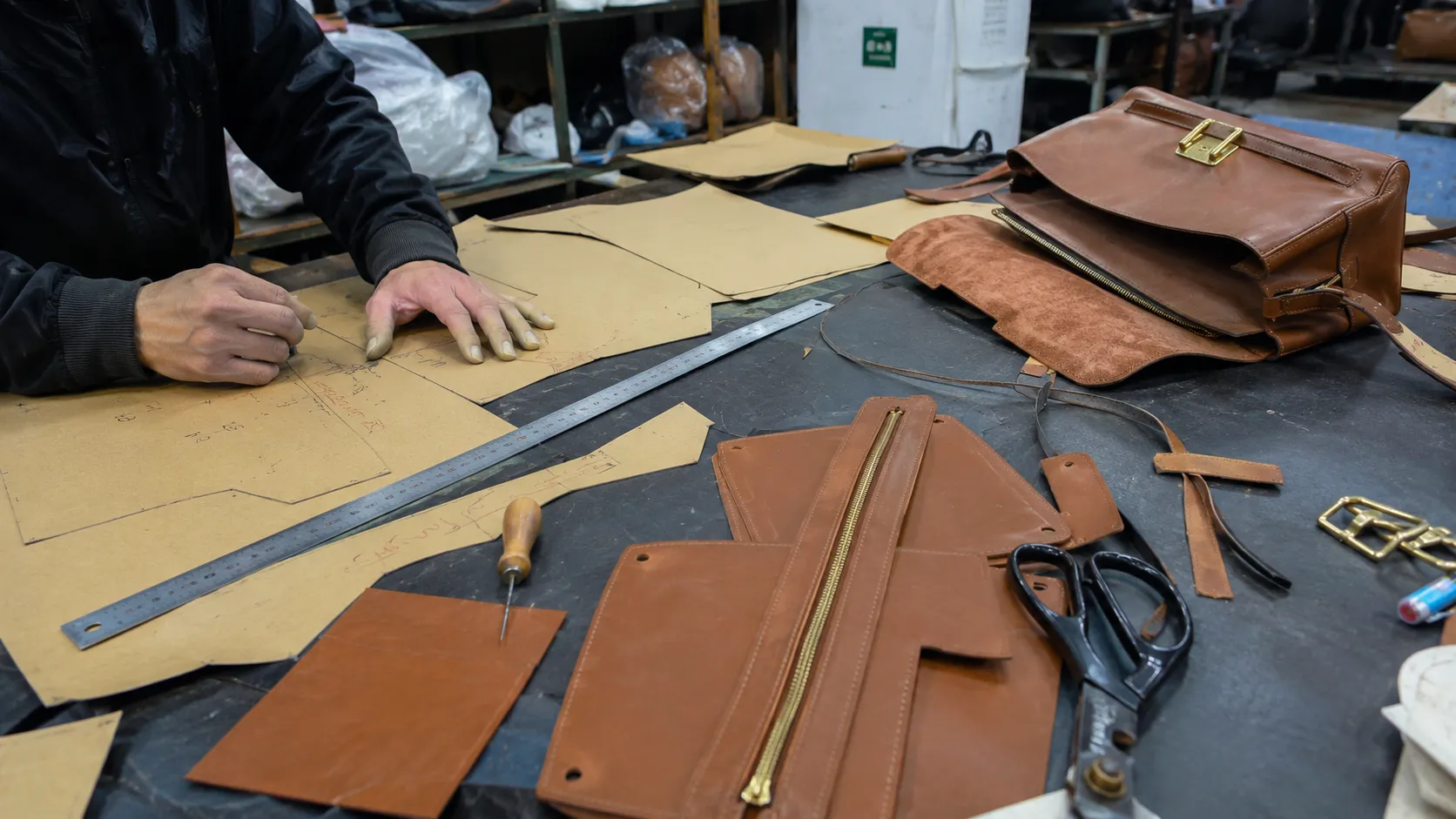
The creation of high-quality bags requires the coordinated collaboration of multiple stages, including product design, sample development, manufacturing, and quality inspection. Understanding the bag manufacturing process helps in selecting a more reliable manufacturer, thereby enhancing product development efficiency and quality while mitigating various risks associated with the partnership.
This article provides a detailed overview of the complete manufacturing process for bags, spanning from product concept to mass production and delivery.
1. Requirement Communication and Design & Development
For OEM/ODM products, manufacturers need to engage in in-depth communication with clients to understand product positioning, usage scenarios, and target markets, and to provide relevant recommendations. Once both parties have clarified the product details, the manufacturer prepares a detailed technical specification document based on the client's requirements, providing an accurate basis for subsequent sample development and mass production. It primarily includes:
-
- Product structure diagram
- Dimensions and specifications
- Bill of Materials (BOM)
- Process requirements
- Production considerations
2. Material Selection and Approval
Next comes the selection of materials, which is one of the key factors determining the quality of the bags. For different types of bags, suitable fabrics and accessories must be selected based on the intended usage environment. Before proceeding with actual sample production, the manufacturer needs to confirm details such as fabric color, thickness, texture, and functional characteristics with the client to ensure that sample development is based on clear material specifications.
3. Sample Development & Approval
Before mass production, manufacturers need to develop samples to ensure that the product's design, structure, functionality, and manufacturing processes meet customer requirements. This stage typically involves the Prototype Sample and the Pre-Production Sample Approval.
-
- Prototype Sample
Initial prototypes are primarily used to validate the product design and manufacturing feasibility. The manufacturer evaluates the finished samples and adjusts or optimizes any parts that do not meet requirements until the samples reach the confirmation standards. Key evaluation aspects include visual appearance, dimensions and specifications, functional performance, product structure, and material characteristics.
-
- Pre-Production Sample Approval
Prior to full-scale mass production, the manufacturer produces a Pre-Production Sample (PPS) to serve as the standard for mass production. Typically, clients need to confirm details such as the fabric, color, logo appearance, craftsmanship, and dimensions.
4. Bulk Material Preparation & Inspection
After PPS approval, the project enters the mass production preparation stage. Manufacturers procure the materials required for mass production—such as fabrics, zippers, and hardware—based on the standards of the Pre-Production Sample (PPS). Once the materials arrive at the factory, they undergo Incoming Quality Control (IQC) to ensure they meet production requirements. Key inspection items include:
-
- Is the fabric color consistent
- Whether the fabric has any flaws or defects
- Whether the material thickness and specifications meet the requirements
- Whether the quality of hardware accessories meets the standards
- Are the material quantities accurate
5. Bag Manufacturing & Process Quality Control
At this point, the bags enter the formal production stage. From cutting and component processing to sewing and assembly, quality checks are implemented at every stage of production to ensure the product meets manufacturing standards.
5.1 Precision Cutting & Cutting Inspection
In accordance with technical specifications and Pre-Production Sample (PPS) requirements, the manufacturer precisely cuts various materials, including fabrics, linings, and filling materials. Precision cutting is fundamental to ensuring consistency in bag dimensions and structure; particular emphasis must be placed on the dimensional accuracy of cut parts and the uniformity of parts within the same batch.
During the cutting process, quality personnel conduct inspections to ensure that all cut parts meet production specifications, thereby preventing dimensional deviations from affecting subsequent assembly.
5.2 Component Processing & Customization
Once cutting is complete, the process moves to the component fabrication stage, which includes the production of shoulder straps, handles, pockets, the carrying system, and more. Concurrently, personalized embellishments—such as screen printing, embroidery, and logos—are applied according to client specifications.
During this stage, each component undergoes in-process quality control (IPQC) to ensure that it meets design specifications and is ready for subsequent main assembly. Key control points include:
-
- Logo placement accuracy
- Pattern clarity
- Attachment durability
- Component dimensional consistency
- Component structural integrity
5.3 Main Assembly & Bag Formation
After completing the machining of the various functional components, the manufacturer proceeds to the main assembly stage. Individual components are assembled into a finished bag through processes such as component combination, main body stitching, zipper installation, and the attachment of hardware fittings. Throughout this process, the manufacturer maintains continuous control over product quality via IPQC inspections, ensuring consistency in the overall structure and workmanship. Key areas of focus:
-
- Product dimensions and specifications
- Stitching quality
- Component fit accuracy
- Structural stability
5.4 Finished Product & Shipment Inspection
Upon completion of all production processes, the products must undergo Final Quality Control (FQC) and pre-loading Outgoing Quality Control (OQC) to ensure the finished goods meet customer requirements.
-
- FQC primarily covers appearance, workmanship, functionality, dimensions, etc.
- OQC primarily covers sampling inspection results, product quantity, packaging condition, and shipping documentation.
Products may only proceed to the final delivery stage after undergoing dual verification by FQC and OQC.
6. Container Loading & Global Shipment
During the final stages of container loading and export delivery, the manufacturer organizes, boxes, and loads the products into containers in accordance with customer requirements, ensuring the goods remain in good condition during transit and are delivered as scheduled.
For international purchase orders, manufacturers also need to assist with export-related tasks, including:
-
- Preparation of export documents
- Arrangement of international logistics
- Management of delivery schedules
Conclusion
Bag manufacturing is a tightly integrated, systematic process. From product design and material preparation to quality inspection, every stage affects the product's appearance, functionality, durability, and overall quality. By understanding the complete bag manufacturing process, you can more thoroughly evaluate a manufacturer's production capabilities and select a partner with expertise in product development, stable production, and quality management.
FAQ
Q1: How long is the production cycle for custom bags?
A: It depends on product complexity, material selection, order quantity, and customization requirements. Generally, sample development takes approximately 7–15 days, and mass production takes about 30–60 days.
Q2: What are the main processes involved in the manufacturing of bags?
A: It typically encompasses stages such as product design, material verification, sample development, material inspection, cutting and processing, component fabrication, main assembly, quality inspection, packaging, and shipment.
Q3: Why is sample approval required before the mass production of bags?
A: Sample confirmation helps customers and manufacturers identify and resolve issues prior to full-scale production, thereby minimizing production variances and ensuring consistency between the bulk products and the approved sample.
Q4: How do bag manufacturers ensure product quality during the production process?
A: Professional bag manufacturers typically establish comprehensive quality control systems, conducting inspections at various stages of production, including Incoming Quality Control (IQC), In-Process Quality Control (IPQC), Final Quality Control (FQC), and Outgoing Quality Control (OQC).
Q5: What customization services can bag manufacturers provide?
A: Includes customization services such as product design, material selection, color customization, structural development, logo customization, and packaging design.
Related Reading