
 EN
EN
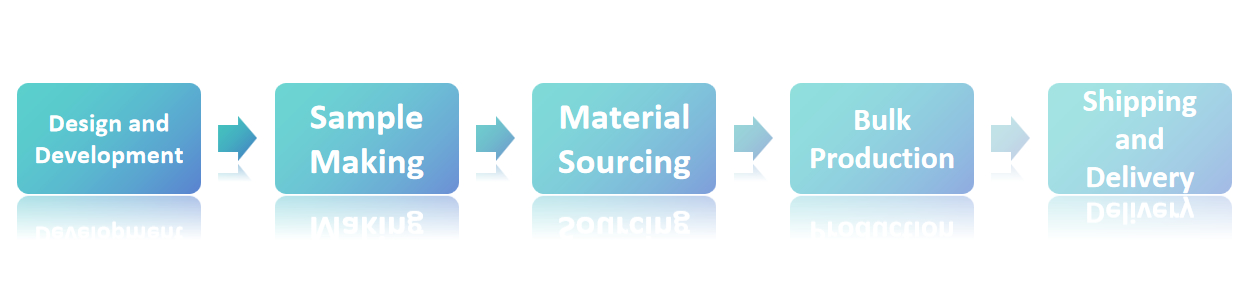
The production cycle of customized bag largely depends on the complexity of the product. Additionally, regardless of the type of bag being customized, it inevitably involves design and development, sample production, material procurement, and mass production. If sea transportation is chosen, it is also necessary to plan the transportation time in advance, as international sea transportation usually takes a longer time.
This article will introduce the time required for each step of customizing bag, based on practical production experience, to help you plan your procurement cycle more reasonably.
1. Design and Development
When producing custom bags, the time required for the design phase differs significantly depending on whether the OEM or ODM model is adopted.
1.1 OEM
In OEM mode, customers typically have a clear product design, technical drawings, or reference samples. If the design scheme is reasonable and the technical requirements are clear, without the need for additional adjustments, this stage can usually be completed in just 1-2 days.
However, if the client lacks product development experience and there are many unreasonable aspects in the design, the manufacturer needs to assist in optimizing the structure and modifying details. Both parties will need to invest more time in communication and confirmation. In this case, the entire design phase may be extended to one month, and if communication is not smooth, the completion time may even be unpredictable.
1.2 ODM
There are usually two scenarios for the ODM model.
If the customer directly chooses an existing product style from the bag manufacturer for OEM production without requiring significant design adjustments, the design confirmation phase can usually be completed within 1-2 days.
However, if the customer only has preliminary design ideas and reference samples, but lacks detailed technical drawings and product plans, the manufacturer needs to take the lead in the entire process of product design, structural development, material selection, and other related tasks. In this case, the early design and development usually takes half a month to a month, and for complex designs, it may extend to about two months.
It can be seen that the time required for bag design and development not only depends on the OEM or ODM model and the complexity of the product, but also closely relates to the professional capabilities of both customers and manufacturers. The more experienced both parties are, the more efficient the communication of requirements and confirmation of solutions usually becomes. Even for products with relatively complex structures, as long as the requirements are clear and cooperation is smooth, the design and development phase is expected to be completed within one month.
2. Sample Making
After confirming the design plan, the next step is to produce samples. Through physical samples, customers and manufacturers can inspect whether the product's appearance, dimensions, materials, functions, and craftsmanship meet expectations, thereby identifying and resolving issues as early as possible and reducing the risks associated with subsequent mass production.
Generally, for bag with a relatively simple structure, sample production can be completed within 7 days. If the product structure is complex, involving new mold development or special processes, it may take 7-14 days.
If the initial samples do not meet the client's expectations, modifications and re-approval are required. Each round of revisions typically adds approximately seven days to the timeline. Since samples often undergo multiple rounds of adjustments before being finalized, the entire sampling and approval phase generally takes around 14 to 28 days.
3. Material Sourcing
After sample confirmation, the manufacturer needs to prepare various materials required for mass production, including fabrics, accessories, zippers, hardware, etc., based on the order quantity and product specifications.
If the product utilizes conventional materials and the supplier has adequate inventory, material preparation can typically be completed within 10 days. However, if customized fabrics, special colors, specialized hardware, or brand-exclusive accessories are required, the timeframe may need to be extended to 15 or 20 days.
For projects with stringent delivery requirements, experienced manufacturers assess the availability of materials during the sample development stage and communicate and coordinate with suppliers in advance, rather than waiting until the sample is confirmed before arranging procurement. This approach not only enables early detection of potential material supply issues but also helps to plan the subsequent production schedule reasonably and improve the reliability of timely order delivery.
4. Bulk Production
Once the materials are fully prepared and meet the production requirements, the bag factory can arrange mass production according to the confirmed samples and order specifications.
The mass production of bag typically involves several stages, including cutting, printing or embroidery, sewing, accessory installation, assembly, and quality inspection. The complexity of the structure, processing steps, and order quantity of different products vary, leading to differences in the actual production cycle.
Generally speaking, for bag with a relatively simple structure, mass production can usually be completed within 30 days; if the product structure is complex and the order quantity is large, it may take around 45 days. In addition, experienced manufacturers usually reserve a certain buffer time to cope with unexpected situations such as quality inspection failures and rework, thereby reducing the risk of delivery delays.
Therefore, a reasonable production plan should not blindly pursue time compression, but should balance production efficiency and delivery cycle while ensuring product quality. For brand owners, stable quality and timely delivery are far more important than simply pursuing a shorter production cycle.
5. Shipping and Delivery
After the factory completes bulk production, quality inspection, and packaging, it also needs to deliver the goods to the customers. For international purchase orders, the transportation method, destination, as well as customs clearance and distribution arrangements, all affect the final delivery time.
Generally speaking, air freight usually takes about 1 week, while sea freight typically takes 3 to 6 weeks. Sea freight usually takes longer, so for large orders of bag, especially for projects with clear launch or sales plans, it is recommended to plan the transportation time in advance to avoid affecting subsequent arrangements.
Except for force majeure and other unforeseeable circumstances, making customs clearance preparations in advance can help reduce the risk of delivery delays. Manufacturers should prepare in advance the commercial invoices, packing lists, and other documents required for export customs declaration, and ensure that the declaration information is consistent with the actual shipment situation. Customers, on the other hand, should confirm the customs clearance requirements of the importing country in advance, provide the required import documents in a timely manner, and maintain communication with freight forwarders or customs clearance agents. Clarifying the respective responsibilities of both parties in advance can help reduce delays caused by customs clearance issues and ensure the smooth delivery of goods.
Conclusion
The overall delivery time for customized bag involves various aspects and is not solely determined by the complexity of the product or the professional capabilities of the manufacturer. Generally speaking, if the product structure is relatively simple and all aspects proceed smoothly, the entire cycle is expected to be controlled within 3 months. However, in actual projects, considering factors such as design adjustments, sample modifications, material supply, and production and transportation, the overall cycle often requires 4 months or even longer.
For buyers, clarifying product requirements in advance, confirming samples promptly, and maintaining smooth communication with manufacturers can help reduce unnecessary waiting and accelerate the overall project progress.
Selecting an experienced bag manufacturer is equally important. A professional manufacturer can not only devise a sound production plan but also identify and avert potential issues during the production process, helping clients ensure timely order delivery while maintaining product quality.
Related Reading