 EN
EN


1. Basic Understanding
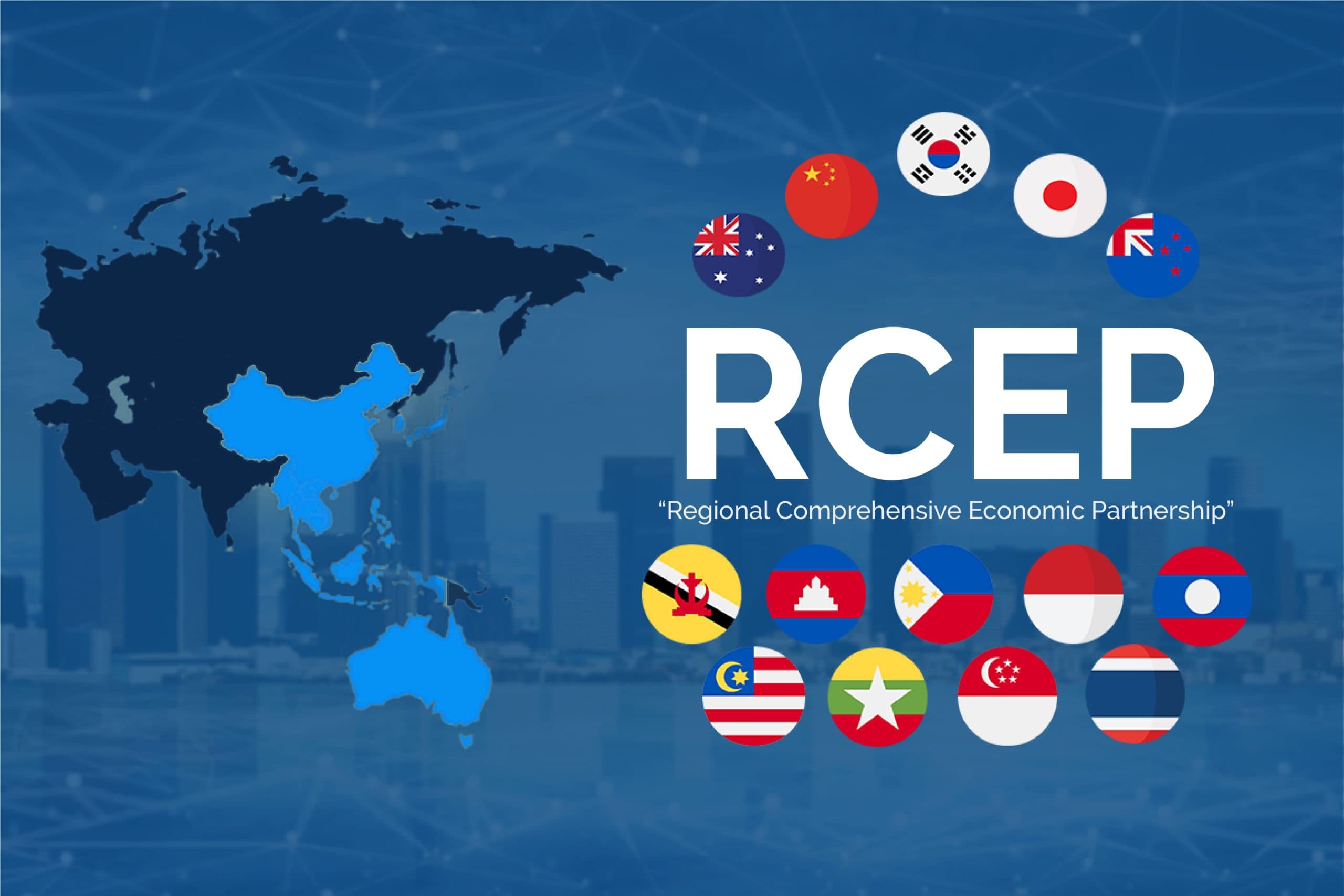
First, let's understand what RCEP is and which countries it encompasses.
The full name of RCEP is the Regional Comprehensive Economic Partnership Agreement, which is a high-level free trade agreement initiated by Southeast Asian countries. The agreement aims to establish a closer market by reducing tariffs and non-tariff barriers.
The countries included in RCEP are:
-
- The ten ASEAN countries are Indonesia, Malaysia, the Philippines, Thailand, Singapore, Brunei, Cambodia, Laos, Myanmar, and Vietnam
- Non-ASEAN 5 countries, China, Japan, South Korea, Australia, and New Zealand
For bag products, the basic logic of RCEP is that for trade among member countries, if the products meet the RCEP rules of origin and can provide corresponding proof of origin, importers can enjoy preferential tariffs lower than the ordinary import tax rate.
2. How Much Can RCEP Tariff Reductions Actually Save on Bag Imports?
The tariff preferences under the Regional Comprehensive Economic Partnership (RCEP) need to be determined based on the importing country, exporting country, specific Harmonized System (HS) code, and applicable year.
The preferential tax rates for bag in some countries in 2026 are as follows:
|
Import Market |
Bags Tariff Item |
2026 RCEP Tax Rate |
|
Japan |
HS 4202.92 |
5% |
|
Australia |
HS 4202.91.90 |
5% |
|
Vietnam |
HS 4202.92.90 |
12.5% |
Note: The RCEP tariff rates in most countries will decrease year by year. For example, the tariff reduction in Australia is as follows: 4% in 2032 → 3% in 2034 → 2% in 2037 → 1% in 2039 → 0% in 2041
Taking Vietnam as an example, if a batch of bag worth $100,000 is imported, and the original import tariff is 25%, while the preferential tariff under the RCEP is 12.5%, the importer can save $12,500 in tariff expenses.
For bag importers, there are usually two ways to utilize the saved tariffs:
-
- Method 1: Maintain the terminal selling price unchanged and convert the saved tariffs into higher profit margins.
- Method 2: Reduce the end-user selling price to enhance the price competitiveness of the product.
3. Three Compliance Requirements for Tariff Reductions on Bag Imports
3.1 Meet the Product-Specific Rules of Origin
This is the core condition for enjoying preferential tariffs under the RCEP.
Generally speaking, to comply with the rules of origin, the regional value content (RVC) of the product needs to reach 40%.
RVC = (FOB value - Value of non-originating materials) ÷ FOB value × 100%
Let me give you a simple example:
A Chinese bag manufacturer exports a batch of backpacks with an FOB value of $100,000. Materials worth $40,000 from non-RCEP member countries were used in the production process.
So:
RVC =(100,000 − 40,000)÷ 100,000 × 100% = 60%
In other words, the regional value content of this batch of goods is 60%.
If the RCEP rules of origin for the corresponding product require an RVC of 40%, then 60% can meet the tax reduction conditions.
3.2 Comply with Direct Consignment and Transit Requirements
In principle, goods should be shipped directly from the RCEP exporting country to the RCEP importing country.
If the goods pass through a non-RCEP member country during transportation, they may still retain their RCEP origin qualification, but further production or processing cannot be carried out during their stay in the non-member country, otherwise they will be subject to rigorous verification.
3.3 Provide Proof of Origin
When applying for preferential tariffs under the RCEP, it is necessary to provide a qualified certificate of origin, such as the RCEP Certificate of Origin or a qualified Declaration of Origin. The relevant documents must contain specified information such as the exporter, importer/consignee, goods description, 6-digit HS code, and origin determination criteria.
4. RCEP's Biggest Benefit: Regional Cumulation and Production Coordination
The regional accumulation rule can be simply understood as follows: as long as the production of bag takes place in an RCEP member country and uses materials that comply with the rules of origin, regional value accumulation can be carried out in accordance with the regulations.
For example, a Vietnamese bag factory produces backpacks:
-
- The fabric is sourced from China
- Zippers are sourced from Japan
- Hardware accessories are purchased from Korea
- Finally, complete the production of backpack in Vietnam
Since the relevant materials are sourced from RCEP member countries (note that the materials must comply with the rules of origin), and the final production is also carried out in member countries, regional value accumulation can be calculated in accordance with the regulations.
The greatest advantage for bag importers is that the supply chain is not confined to a single country, allowing for more flexible cross-border procurement and production collaboration.
5. Common Misconceptions About RCEP for Bag Imports
5.1 Purchasing bag from China and exporting it to RCEP countries will automatically result in tax reduction.
Incorrect. Even if both the exporter and importer are RCEP member countries, if the raw materials or production of the bag does not comply with the RCEP rules of origin, it still cannot enjoy preferential tariffs.
5.2 As long as it complies with RCEP, it must be tariff-free.
Incorrect. The actual preferential tax rate depends on the importing country, exporting country, specific HS code, and the year of import. For details, please refer to the explanation of preferential tax rates in Chapter 2.
5.3 RCEP preferential tariffs also apply to the European and American markets.
Incorrect. As we have explained in the basic understanding section of Chapter 1, preferential tariffs under the RCEP only apply to eligible trade among RCEP members.
5.4 RVC only calculates the raw materials of the producing country itself.
Incorrect. The regional accumulation rule of RCEP allows eligible originating materials to participate in the accumulation calculation. In the example presented in Chapter 4, materials such as Chinese fabrics, Japanese zippers, and Korean hardware, which comply with the rules of origin, can all be included in the cumulative calculation of RVC.
6. Conclusion: RCEP Offers More Than Tariff Benefits
For bag importers, the value of RCEP goes beyond just reducing tariffs. More importantly, it allows businesses to have greater flexibility in arranging raw material procurement, production locations, and export markets. By making rational use of rules of origin and regional accumulation rules, enterprises can connect RCEP member countries such as China, Vietnam, and Japan, and flexibly allocate resources based on each country's supply chain and production advantages, thereby enhancing overall competitiveness.
If your country is a member of the Regional Comprehensive Economic Partnership (RCEP), integrating RCEP into supply chain planning and fully leveraging the advantages of regional trade will become one of the most noteworthy directions for you in the future.
Related Reading
1. Differences Between Importing Bags from China and Vietnam
Table of Contents
- 1. Basic Understanding
- 2. How Much Can RCEP Tariff Reductions Actually Save on Bag Imports?
- 3. Three Compliance Requirements for Tariff Reductions on Bag Imports
- 4. RCEP's Biggest Benefit: Regional Cumulation and Production Coordination
- 5. Common Misconceptions About RCEP for Bag Imports
- 6. Conclusion: RCEP Offers More Than Tariff Benefits