 EN
EN


Introduction
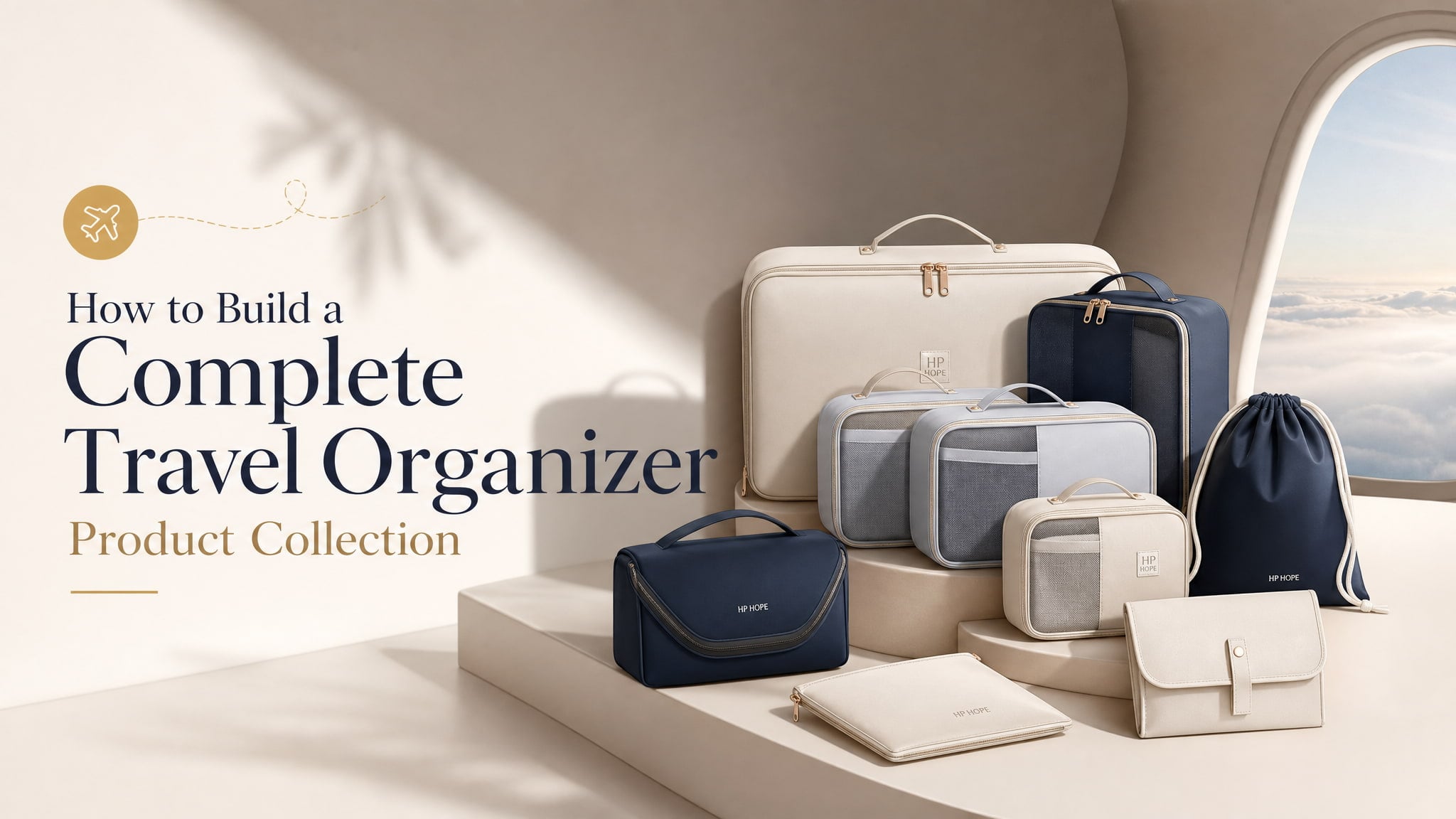
Travel organizers are not a single product category. From clothing organization to toiletries, footwear, and electronic accessories, different products address different storage needs during travel.
For brands and buyers, creating a comprehensive travel organizer product collection entails more than simply adding more SKUs. It is more important to start with actual travel needs, identify core products, and then gradually introduce complementary items that cater to various usage scenarios.
A well-designed product lineup should establish clear functional relationships among the various products.
1. Start with Travel Organization Needs
What issues do travelers actually need to address when packing their luggage?
For instance, travelers often need to sort and organize their clothing, keep cosmetics and toiletries separate from other items, and store shoes apart, while also managing electronic accessories, soiled laundry, or other small items.
These diverse storage needs form the basis of the product planning—for example:
-
- Clothing organization → Packing Cubes
- Cosmetics and toiletries storage → Travel Cosmetic Bags
- Shoe separation → Travel Shoe Bags
- Dirty laundry separation → Laundry Bags
- Wet and dry item separation → Wet/Dry Bags
Planning the product line in this way avoids the development of products with redundant features and makes it easier to establish a product series with clear logic.
2. Build the Basic Collection Around the Core Product
Among the many travel organization products available, packing cubes can serve as the core item of a travel organizer collection.
The reason is that organizing clothing is one of the most common packing needs during travel. Whether for short trips, business travel, or long-distance journeys, consumers need to organize and categorize their clothes within limited luggage space.
For brands, packing cubes also offer excellent product extensibility; they can be sold as standalone items or bundled with other storage products to create a more comprehensive travel organization solution. In this way, the product line naturally expands from a core need into other use cases, rather than planning multiple individual products simultaneously from the outset.
Therefore, when creating a Travel Organizer Collection, selecting a core product with broad applicability can help the brand establish a clear foundation for its product line.
3. Add Complementary Products to Cover Different Storage Needs
Once the core product is established, the next step is not to add more similar products, but to seek complementary products that solve other travel organization issues.
At this stage, our core product is Packing Cubes, which address the need for clothing organization.
However, when traveling, cosmetics, toiletries, and personal care items—in addition to clothing—also require separate organization. Consequently, travel cosmetic bags naturally serve as a complement to packing cubes, specifically addressing the storage of personal care products.
Shoes represent another distinct need when it comes to packing for travel. If shoes are packed directly alongside clothing, dust and stains from the soles could affect other items. Travel shoe bags can be used to store footwear separately, keeping them isolated from the rest of your luggage.
Finally, where should worn clothes be put? Placing dirty and clean clothes together in the same packing cube defeats the purpose of organizing them. Laundry bags serve as a useful supplement to meet this need, providing a dedicated space for worn garments.
From a product portfolio perspective, these four product categories correspond to:
Clothing → Personal Care → Footwear → Dirty Clothing
They address distinct yet interconnected storage needs encountered during travel, allowing them to form a foundational and logical Travel Organizer Collection.
4. Expand the Collection for Specific Travel Scenarios
Once the brand has established its basic product collection, it can further expand the range based on specific storage needs.
4.1 Long-Haul Travel: Maximize Luggage Space
Long-distance travel often entails carrying more clothing and personal items, making luggage space a common constraint. Standard packing cubes may not fully meet these space-management needs, presenting an opportunity for brands to develop compression packing cubes.
By compressing the volume of clothing, these products help travelers make more efficient use of suitcase space, making them particularly suitable for long-distance trips and situations requiring a large amount of clothing.
Therefore, for brands targeting long-distance travelers, compression packing cubes can serve as a functional extension of their standard packing cube product line.
4.2 Outdoor Travel: Separate Wet and Dry Items
Compared to standard city travel, outdoor trips are more likely to result in items—such as wet clothing, swimwear, and towels—that require separate storage. Such needs cannot be fully met by ordinary laundry bags, as wet items must be kept separate from dry ones, and the storage solution typically needs to be easier to clean or offer some degree of water resistance.
Therefore, brands can incorporate wet/dry bags into their basic collections to address the need for separating wet and dry items. This allows the product line to expand beyond general travel organization into specific scenarios such as outdoor activities, beach outings, and water sports.
4.3 Family Travel: Improve Organization and Capacity
A characteristic of family travel is that storage needs typically involve larger quantities and greater capacity requirements.
Therefore, to target the family travel market, brands can focus on expanding their range to include packing cubes of various sizes and capacities, as well as larger-capacity travel organizers. Additionally, offering different colors, sizes, or identifiers can help family members distinguish their respective belongings.
This type of expansion does not involve adding new products; instead, it entails adjusting dimensions, capacities, and configurations to make existing products better suited for family travel scenarios.
5. Control the Number of Products to Avoid Overextending the Product Line
As the range of travel organizer products expands, brands can easily fall into a common trap: continuously adding new SKU to make the product lineup appear more comprehensive, even when there is functional overlap between items or market demand remains unclear.
Therefore, creating a comprehensive Travel Organizer Collection does not mean covering every type of travel storage product. What matters more is ensuring that each product serves a clear purpose and aligns with the brand's strategic positioning.
When deciding whether to add a new product, a brand can consider several questions:
-
- Does it address storage needs that existing products cannot meet?
- Does it serve a clear travel scenario?
- Does it complement existing products rather than duplicating their functions?
- Does it align with the brand's existing product positioning?
If a new product addresses a similar problem to an existing one—differing only slightly in structure or appearance—the brand does not necessarily need to add it to its product lineup. From the perspective of product development and procurement, maintaining a focused product line helps reduce the complexity of development, procurement, and inventory management.
Conclusion
For a comprehensive travel organizer product collection, what truly needs to be built is not merely more products, but a complete organizational logic.
From clothing, personal care items, footwear, and soiled garments to storage needs arising from specific travel scenarios, the addition of each product should address a distinct problem. Therefore, when planning a "travel organizer" product line, brands should first ask themselves: "What problems do existing products fail to solve?"
When each product has a clear functional purpose and connects naturally with the others, a truly complete travel organizer product collection can be formed—even with a limited number of items.
Table of Contents
- Introduction
- 1. Start with Travel Organization Needs
- 2. Build the Basic Collection Around the Core Product
- 3. Add Complementary Products to Cover Different Storage Needs
- 4. Expand the Collection for Specific Travel Scenarios
- 5. Control the Number of Products to Avoid Overextending the Product Line
- Conclusion