
 EN
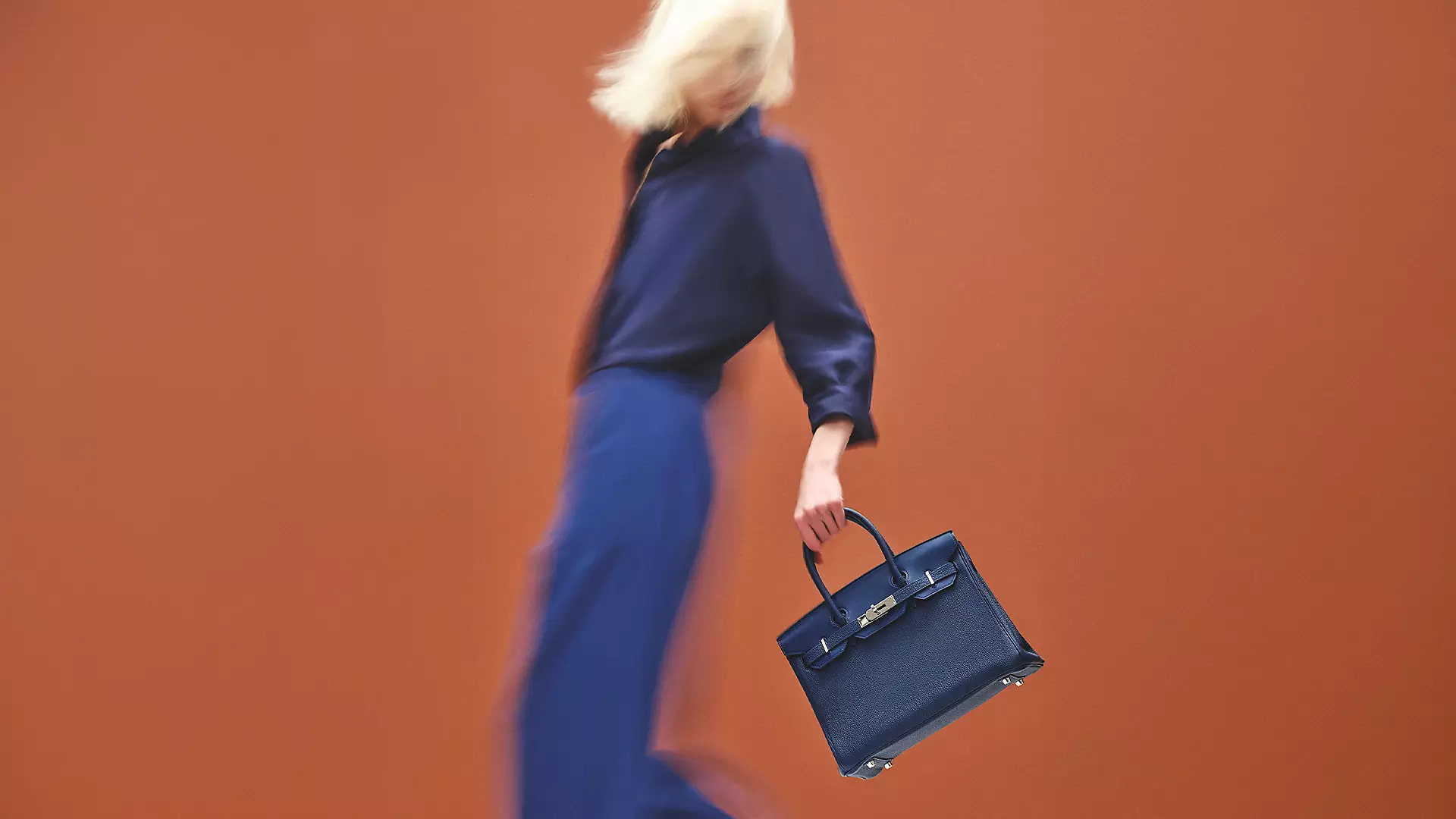
We previously analyzed the production costs of an LV bag. If one considers only the cost of raw materials and labor—excluding taxes, operational expenses, and other such costs—the production cost for a single LV bag is approximately $33. At this point, you might well ask: what if it were a bag from the world’s premier luxury brand, Hermès?
Hermès bags are widely recognized as the pinnacle of genuine leather craftsmanship; compared to Louis Vuitton bags, there is a vast disparity in material costs alone. Consequently, Hermès bags command very high prices, with versions made from rare leathers sometimes selling for tens of thousands of dollars. So, what is the actual manufacturing cost of an Hermès handbag? Let’s find out today.
This article provides an in-depth breakdown of the Hermès Birkin 30 (in Togo leather) as a case study. Since Hermès does not disclose its internal data—such as the procurement costs of its materials—we will rely on publicly available price quotes from top-tier suppliers of high-end leather and hardware, and estimate material consumption based on the actual dimensions of the products.
It should be noted that the following figures are estimates and do not represent Hermès’ actual internal production costs.
1. Main Leather Material Cost
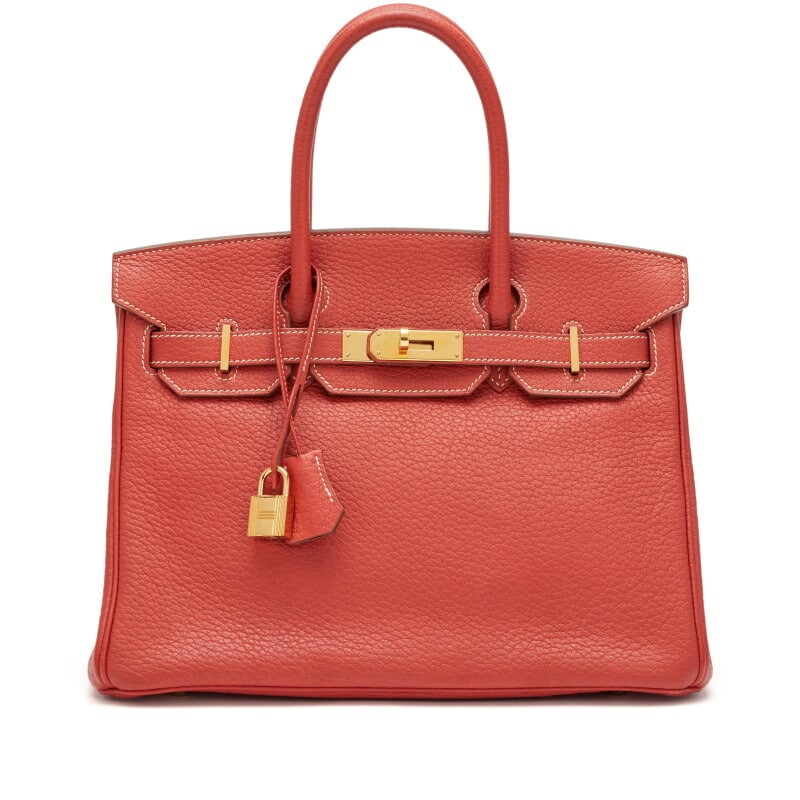
The Birkin 30 features Hermès’ most iconic Togo grained calfskin as its primary exterior material. This leather is renowned for its natural grain texture, soft feel, and excellent durability.
We have selected high-quality Togo calfskin—sourced from top-tier European tanneries such as Haas (France) or Weinheimer (Germany)—as our reference material. Based on publicly available market pricing, this premium top-grain calfskin costs approximately $22–$26 per square foot.
The dimensions of this Birkin bag are: 30 cm in length, 22 cm in height, and 16 cm in width. The estimated amount of leather required for a single bag is:
|
Leather Part |
Est. Area |
|
Body (Front/Back, Sides & Bottom) |
~0.18 m² |
|
Flap & External Structures |
~0.04 m² |
|
Handle, Straps & Key Cloche |
~0.08 m² |
|
Total Net Usage |
~0.30 m² |
|
+ 60% Cutting Waste |
~0.18 m² |
|
Total Estimated Est. Usage |
~0.48 m² |
Hermès maintains an exceptionally rigorous selection process for its leather, strictly avoiding any areas affected by insect bites, scars, or uneven grain; consequently, the rate of waste during the cutting process is extremely high. In our calculations, we have factored in a cutting loss of up to 60%—significantly higher than the 30% typical for leather goods—which means that crafting a single Birkin 30 requires approximately 0.48 square meters of leather.
0.48 square meters is approximately 5.17 square feet; based on a maximum procurement price of $26 per square foot, the cost of the Togo leather used for a single Birkin 30 bag is roughly $134.40.
2. Lining Material Cost
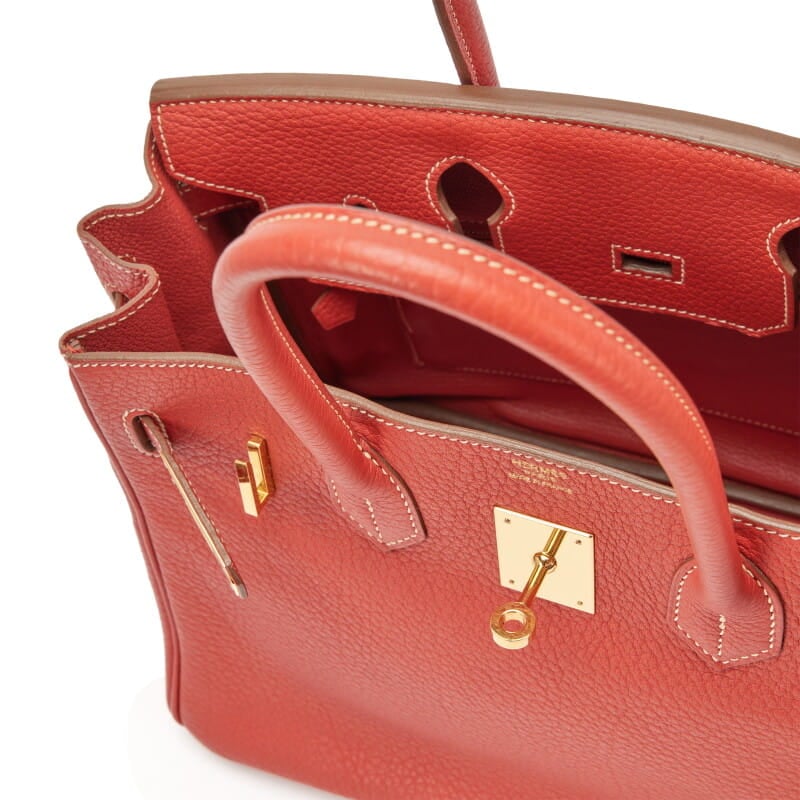
The interior of the Hermès Birkin 30 is not lined with ordinary fabric; instead, it is fully lined with premium Chèvre goatskin. We use high-grade goatskin from Italy (Tannery Bonaparte) or France (Alran) as a reference material, which has an open-market price of approximately $18.50 per square foot.
Estimation of lining material required for a single bag:
|
Lining Part |
Est. Area |
|
Interior Bottom & Sidewalls |
~0.20 m² |
|
Interior Pockets & Other Lining Parts |
~0.07 m² |
|
Total Net Usage |
~0.27 m² |
|
+ 40% Cutting Waste |
~0.108 m² |
|
Total Estimated Usage |
~0.38 m² |
0.38 square meters is approximately 4.09 square feet; at a reference price of $18.50 per square foot, the cost of the goatskin lining material for each Birkin 30 comes to about $75.70.
3. Trim Cost
Hermès bags require exceptional structural rigidity and defined shaping; to achieve this, they incorporate a substantial amount of specialized, high-rigidity internal reinforcement materials (sourced from Italy’s Luigi Carnevali), premium waxed saddle-stitching thread (Fil Au Chinois from France), and multiple layers of high-precision edge paint.
The estimated cost of these materials is as follows:
-
- Internal structural supports and reinforcing interlining: approx. $6.00
- Premium saddle-stitched waxed thread and hand-applied edge paint materials: approx. $4.00
- Total estimated trim cost: approximately $10.00
4. Custom Hardware Cost
One of the visual centerpieces of the Birkin 30 lies in its metal hardware, which includes:
-
- Signature turn-lock closure on the front
- Metal tips on the two leather straps
- Custom padlock and key
- Four metal protective feet on the base
Hermès uses a high-grade brass or stainless steel base, which undergoes an exceptionally refined gold or palladium plating process. We use the price quotes from M.M.C. Colombo—a contract manufacturer of hardware for top-tier European luxury brands—as a reference:
|
Hardware Components |
Calculation & Estimation |
Estimated Cost |
|
Center Turn-Lock & Strap Hardware |
Premium electroplating and mirror polishing (full set) |
$25.00 |
|
Custom Metal Padlock & Key Set |
1 set |
$8.00 |
|
Protective Bottom Studs |
4 × $1.50 |
$6.00 |
|
Other Metal Rings & Hidden Reinforcements |
Estimated as a set |
$3.00 |
|
Total Hardware Cost |
|
$42.00 |
5. Direct Labor Cost
In Hermès’ cost model, labor costs occupy an exceptionally significant position.
The Birkin bag is crafted entirely by hand by skilled French artisans, using the "saddle stitch" technique. Hermès has previously disclosed that it takes approximately 15 man-hours to craft one of its iconic Birkin bags. To ensure the objectivity of the estimate, we have used a more conservative figure of 18 hours of purely hand-sewing labor for our calculations.
Taking into account the salary levels for highly skilled technical personnel in France, as well as the high "hidden" employment costs—such as substantial social security and welfare contributions—we estimate the total hourly cost for a skilled craftsperson to be $35.
Therefore, in this cost model, the direct labor cost is approximately $630.00.
6. Direct Manufacturing Cost Summary
Based on the above, we have determined the cost breakdown for this Birkin 30:
|
Cost Item |
Estimated Cost (USD) |
|
Togo Calfskin (Main Material) |
$134.40 |
|
Chèvre Goatskin (Lining) |
$75.70 |
|
Trims, Waxed Thread & Edge Paint |
$10.00 |
|
Custom Hardware |
$42.00 |
|
Skilled Artisan Labor |
$630.00 |
|
Total Direct Manufacturing Cost |
$892.10 |
By summing all the core items mentioned above, we arrive at a direct manufacturing cost of approximately $892.10 for an Hermès Birkin 30 handbag.
It must be reiterated that this estimate covers only direct material and labor costs; it excludes expenses such as leather goods R&D and design, sunk costs related to artisan training, scrap rates, advertising and marketing, store operations, and applicable taxes.
7. Manufacturing Cost vs. Retail Price
Currently, the official retail price for a standard Hermès Birkin 30 in Togo leather at a boutique in the United States is approximately $14,900; the direct costs for materials and manual labor—totaling $892.10—account for only about 5.9% of that retail price.
However, we cannot simply equate this ratio to the brand's final net profit margin.
When a consumer purchases an Hermès Birkin bag, they are acquiring far more than just a luxury item; they are buying into a legacy of saddlery craftsmanship dating back to 1837, a status symbol that serves as an irreplaceable "entry ticket" to the realm of ultra-luxury, and a level of scarcity that borders on the mythical. It is precisely this form of cultural capital—forged through time, barriers of craftsmanship, and class identity—that truly underpins the spiritual core behind Hermès’s high price tags.